Renewables & Incentives Database (Tue Tip)

Isun and cloudsnterested in knowing what state incentives may be applicable for your energy efficient construction project?  Check out the Database of State Incentives for Renewables & Efficiency (DSIRE).

The searchable database provides a comprehensive source of information on state, local, utility and federal incentives and policies that promote renewable energy and energy efficiency.

Do you have a “hot” link to share?  Let me know!  And, sign up for email delivery of all blog posts right to your in-box so you’ll never miss a post!

———————–

Photo (c) Joshua Sosrosaputro via Creative Commons license.

Should You Be a LEED Green Associate? (Tue Tip)

LEED Green Associate

Those of you who follow my twitter stream know that I recently passed the exam to become accredited as a LEED Green Associate.  The LEED Green Associate is a new credential, and the first level of credentialing that also includes the LEED-Accredited Professional + Specialty.

Why did I do it?  I wanted to have a better understanding of the various LEED requirements and sustainability issues when working with my architect and engineering clients.  Many of my A/E clients are AP certified — most before the new burdensomedetailed requirements were issued (not that I’m bitter or anything!).   I, on the other hand, knew just enough about green design to be dangerous.

While I’m ready not exactly ready to go out and leap tall (green) buildings (no doubt complete with vegetated roof) in a single bound, I do have a much broader understanding of the intricacies of complying with not just Code issues but also LEED issues in mind.

So, to return to the title, should YOU get a LEED Green Associate accreditation?  Yes.  If you are reading here, then you probably would benefit.  (Unless you StumbleUpon’d your way here, in which case, not necessarily!)  If you work with architects and engineers, and certainly if you are an A/E and haven’t yet gotten green credentialing, get your Green Associate credential.   You will learn about a wide cross-section of green issues, including sustainable sites (SS), water efficiency (WE), energy & atmosphere (EA), materials & resources (MR), indoor environmental quality (EQ), innovation in design (ID), and regional priority issues.

Are you interested in becoming a Green Associate?  Let me know and I can share some study tips. 

Or, are you already accredited with the USGBC?  Under the old or new system?  What has it taught you?  Share in the comment section below.

  ———————–

“LEED Green Associate” and the LEED Green Associate logo are trademarks owned by the U.S. Green Building Council and are awarded to individuals under license by the Green Building Certification Institute.

Case Studies for Sustainable Landscapes (Tue Tip)

stormwater treatment basin with aquatic plants

Interested in incorporating sustainable landscape solutions into your projects?  The Landscape Architecture Foundation (LAF) has a database of case studies just for you!

LAF’s Landscape Performance Series is an online interactive set of resources to demonstrate the value of sustainable landscapes to agencies, owners, advocates, and others.

The Performance Series includes:

  • Case Study Briefs
  • Benefits Toolkit
  • Factoid Library
  • Scholarly Works

Check it out!

Do you have a favorite resource on the web for your design practice?  If so, drop me a line so I can share your find with your fellow architects, engineers, and construction professionals. 

————————-

Photo: from LAF’s Performance Series Case Study Brief: Kroon Hall, Yale School of Forestry

Sneak Peek on Contract Essentials Plus Web Forum Tip

construction of a messy room

Sneak Peek:  Tomorrow I have the honor of guest writing on Chris Hill’s Construction Law Musings blog. I previously wrote a post on Chris’ blog back in August 2010.  I must not have have made too much of a mess over there, as he’s signed up for more.

My topic will be about contract essentials, so you won’t want to miss it.  I’ll post a link to the article here once it goes live.    Here’s the link.

————————————————————————

 Photo: from Moon, Stars & Paper via Creative Commons license.

Engineers: the Aliens who Make Our Lives Better (Guest Post)

Today we have a guest post by Tim Fausch (adapted from and reprinted with permission by BNP Media), publishing director of BNP Media’s Architecture, Engineering & Construction, Security and Mechanical Systems Groups, a collection of more than 20 trade magazines, Web sites and e-newsletters.
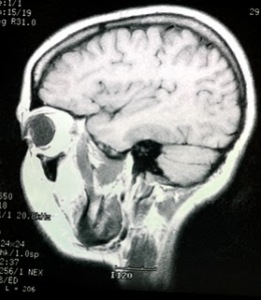
alien x-ray

I’ve been thinking a lot about engineers lately and concluded they must be alien beings. For reasons I do not understand, God sent these advanced life forms to earth to keep people like me from mass chaos. There must be an engineering angel whose job is to keep us from self-destruction.

A recent development led me to this epiphany:

This summer, I started demolishing a retaining wall and deck my father built back in the 1960s. The cinderblock wall and cement deck functioned beautifully around our above ground swimming pool for most of my youth.

Then, in the 1970s, my dad transformed our pool into a garden, and it has been producing tomatoes and onions ever since. Unfortunately, my father passed away and the secrets of his cement structure were lost forever.

The structure was showing some wear and tear, so the “smart” thing to do was to knock it down and return it to its long-ago status as a grass-covered hill.

“This will be a piece of cake,” I told my family members. “Just a few hardy swings with a sledge hammer and we’d reduce the structure to rubble.”

Somehow, I severely underestimated its structural integrity. The cinderblock wall wasn’t so bad, but the cement deck apparently was built to the same specs as the Hoover Dam.

The pad was several inches thick and hid an encased a wire mesh. Nearly a half century later, it was still solid as a rock.

It took five adult men countless hours to slay the beast. We only missed our target demolition date by three weeks.

Did I mention that my father was an engineer? This is the same guy who reveled in assembling televisions from 500-part kits (Heath kits), so it was really brainless of me to think this structure would come down in less time than the fall of the Berlin Wall.

If I had been in charge of this project it would collapsed decades ago. It would have caved in the pool, creating a tidal wave that would have flooded our basement. The insurance adjuster would have concluded a tornado blew through our yard. I would have nodded in agreement.

I don’t know about you, but every time I drive over a bridge, ride an elevator, or fly in a plane, I am thrilled to know that somehow an engineer made these things work.  Engineers – the aliens who make our lives better.

————————–

Photo by suttonhoo via Creative Commons License.